X9.0 solar flare! Strongest flare of Solar Cycle 25!
четвер, 3 жовтня 2024 18:06 UTC

Sunspot region 3842 is on fire! This region is in a perfect earth-facing position and today produced the strongest solar flare of the current solar cycle! It was an X9.05 solar flare (R3-strong) that peaked at 12:18 UTC. This is in fact the strongest solar flare in 7 years. The last time we had solar flares bigger than this one was back in 2017! Yes that is the previous Solar Cycle!
The solar flare was fairly impulsive but it still did cause an eruption which released solar material out in to interplanetary space. However, when we look at the coronagraph imagery from SOHO/LASCO courtesy of SEEDs we see a complex puzzle. The image is quite complicated with multiple eruptions going on, most notably an eruption to the north-west which likely comes from a filament eruption, an eruption to the north-west which might be far side related and a mostly southward eruption which likely is the X9 flare. However, we do see a clear full halo outline and a lot of you know what that means, there is an earth-directed coronal mass ejection inbound. We did not do any speed calculations yet but the coronal mass ejection does not look very fast purely based on the images we have right now. It is easy to get hyped but we are not expecting similar aurora like we had in May from this eruption but it will still be an event to look forward to.
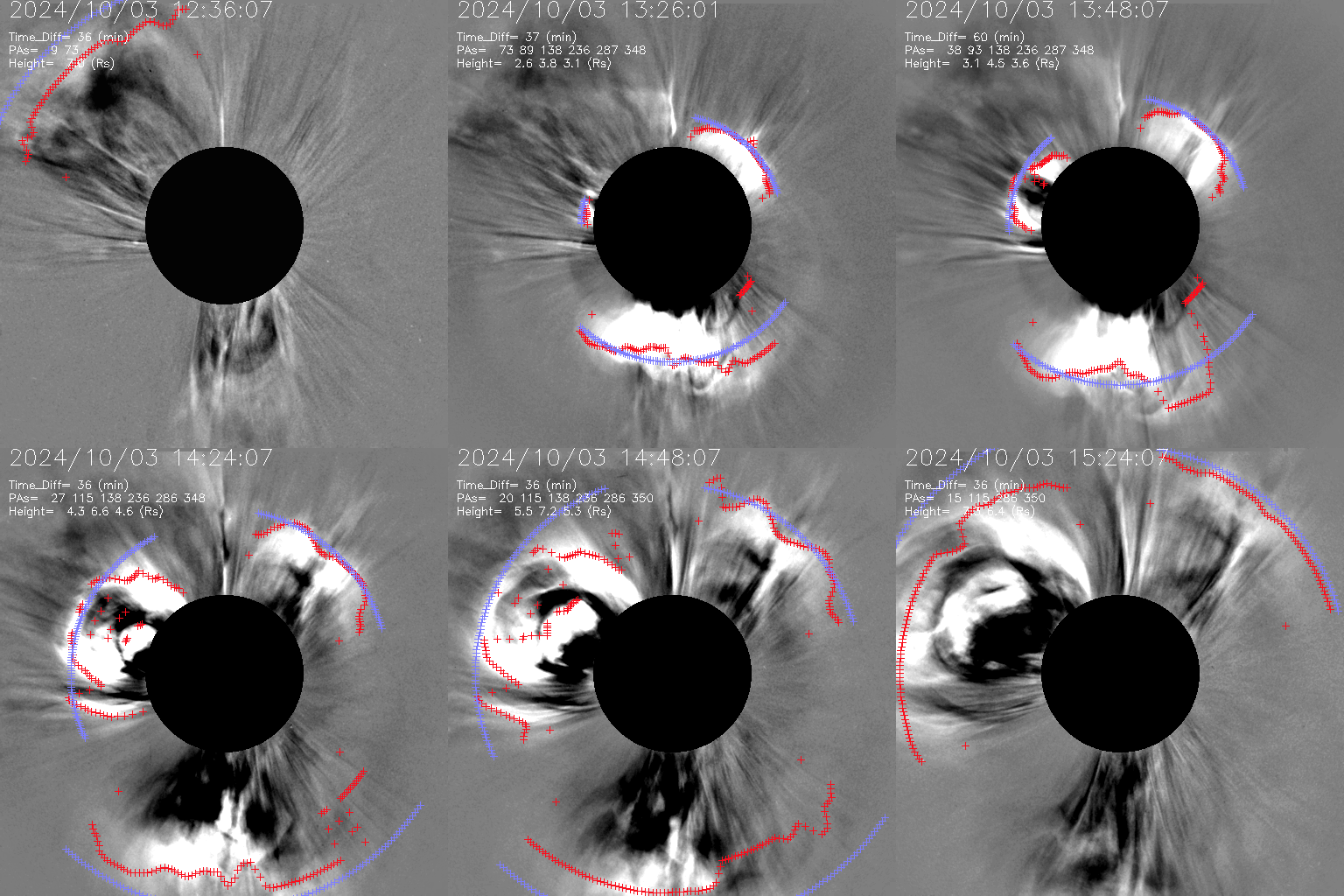
Arrival times and Kp forecasts will be provided later once more data comes in but it's looking good for those who love aurora with now two coronal mass ejections heading towards Earth, the first one is expected to arrive at Earth in roughly 24 hours from now (late on 4 October).
Thank you for reading this article! Did you have any trouble with the technical terms used in this article? Our help section is the place to be where you can find in-depth articles, a FAQ and a list with common abbreviations. Still puzzled? Just post on our forum where we will help you the best we can!
Останні новини
M8.1 solar flare with earth-directed CME
X1.9 solar flare, Coronal hole faces Earth
X4.0 solar flare
Останні повідомлення з форума
Підтримайте SpaceWeatherLive.com!
Багато людей заходять на SpaceWeatherLive, щоб стежити за сонячною активністю або якщо є можливість побачити полярне сяйво, але зі збільшенням трафіку зростають і витрати на підтримку серверів в мережі. Якщо вам подобається SpaceWeatherLive і ви хочете підтримати проект, ви можете вибрати підписку на безрекламний сайт або розглянути можливість зробити пожертву. З вашою допомогою ми зможемо підтримувати SpaceWeatherLive онлайн!



Факти про космічну погоду
| Останній X-спалах | 2025/12/08 | X1.1 |
| Останній M-спалах | 2025/12/12 | M1.1 |
| Останній геомагнітний шторм | 2025/12/12 | Kp5 (G1) |
| Дні без сонячних плям | |
|---|---|
| Останній день без сонячних спалахів | 2022/06/08 |
| Середня кількість сонячних плям протягом місяця | |
|---|---|
| листопада 2025 | 91.8 -22.8 |
| грудня 2025 | 128 +36.2 |
| Останні 30 днів | 108.4 +15.8 |