X4.0 solar flare
пятница, 14 ноября 2025 19:11 UTC
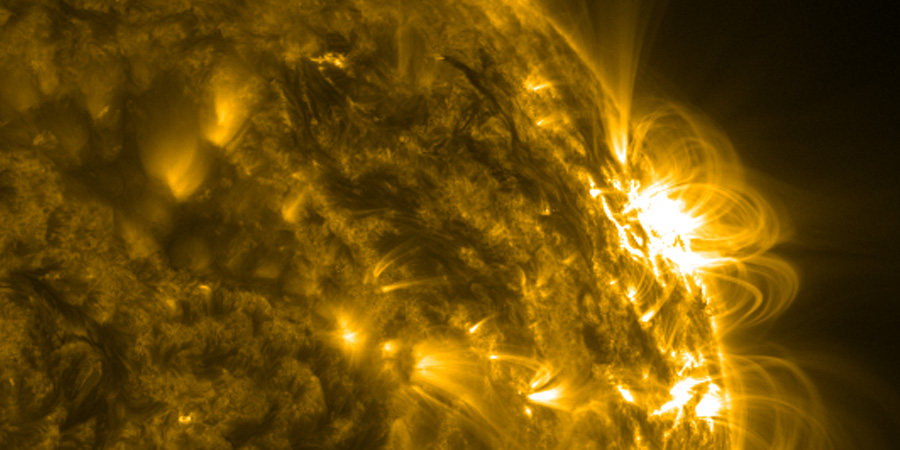
A X4.0 (R3-strong) solar flare peaked at 08:30 UTC this morning. It was of course departing sunspot region 4274 which has been the source of so many solar flares and even geomagnetic storms this past week that provided the fireworks.
A Coronal Mass Ejection (CME) was launched into space but sunspot region 4274 is now near the west limb so the ejecta is heading mostly towards the north-west. We do see a faint full halo outline on the latest GOES-19 CCOR-1 coronagraph imagery which suggests a glancing blow might be possible.

Solar wind models
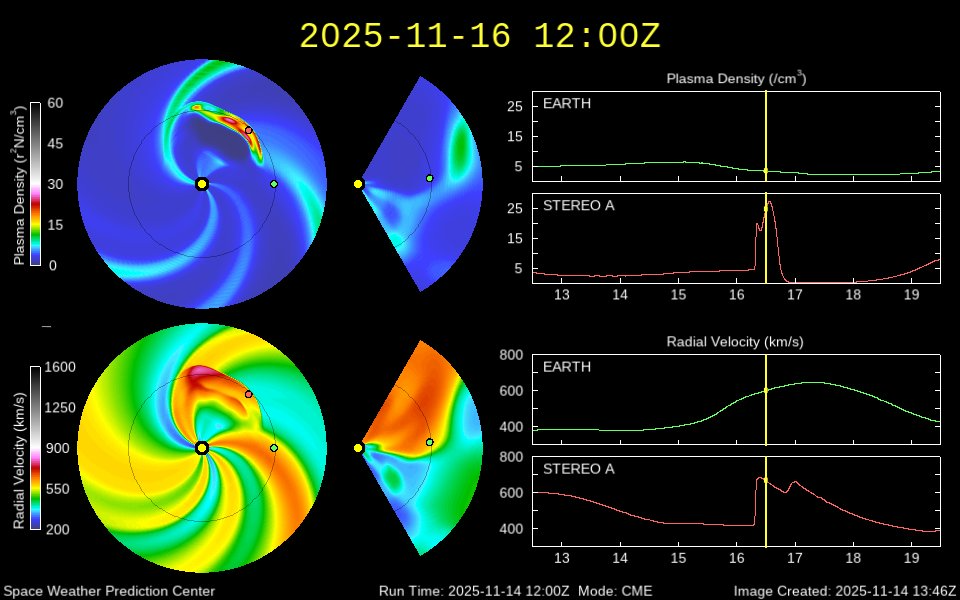
Looking at the solar wind models we see NOAA SWPC's model forecasting a miss on 16 November while NASA's solar wind model shows a glancing blow on the same date. It makes sense to forecast a miss in this case purely based on the location of sunspot region 4274 but we go with the weak halo outline which we can see on the coronagraph imagery. We do believe NASA's solar wind model has a shot at being correct and a glancing blow is not out of the question on Sunday, 16 November. A minor (G1) geomagnetic storm watch is in effect starting this Sunday due to coronal hole influences but a glancing blow CME impact should not be ruled out.

Thank you for reading this article! Did you have any trouble with the technical terms used in this article? Our help section is the place to be where you can find in-depth articles, a FAQ and a list with common abbreviations. Still puzzled? Just post on our forum where we will help you the best we can!
Последние новости
X1.5 solar flare
M2.7 solar flare, CME arrival possible
Complex sunspot region 4366
Последние сообщения с форума
Поддержка SpaceWeatherLive.com!
A lot of people come to SpaceWeatherLive to follow the Solar activity or if there is a chance to see the aurora, but with more traffic comes higher costs to keep the servers online. If you like SpaceWeatherLive and want to support the project you can choose a subscription for an ad-free site or consider a donation. With your help we can keep SpaceWeatherLive online!



Факты о космической погоде
| Последняя X-вспышка | 30/03/2026 | X1.5 |
| Последняя M-вспышка | 02/04/2026 | M3.5 |
| Последняя геомагнитная буря | 25/03/2026 | Kp5+ (G1) |
| Безупречные дни | |
|---|---|
| Последние 365 дней | 3 дней |
| 2026 | 3 дней (3%) |
| Последний безупречный день | 24/02/2026 |
| Среднемесячное количество солнечных пятен | |
|---|---|
| февраля 2026 | 78.2 -34.3 |
| апреля 2026 | 130 +51.8 |
| Последние 30 дней | 92.6 +25.1 |