Latest news updates Subscribe
Coronal hole faces Earth, Minor G1 geomagnetic storm watch
piątek, 7 lutego 2025 19:26 UTC
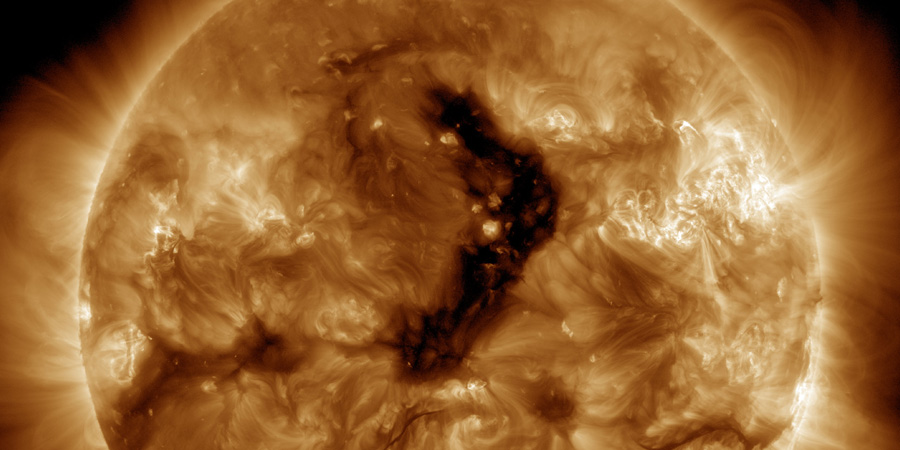
Geomagnetic conditions have been relativity quiet lately with no strong geomagnetic storms to speak of. Coronal holes are however making a return and we are seeing them more regularly appearing and influencing the weather in space around Earth and thus the aurora dancing above our heads.
Double coronal holes face Earth
środa, 29 stycznia 2025 15:19 UTC
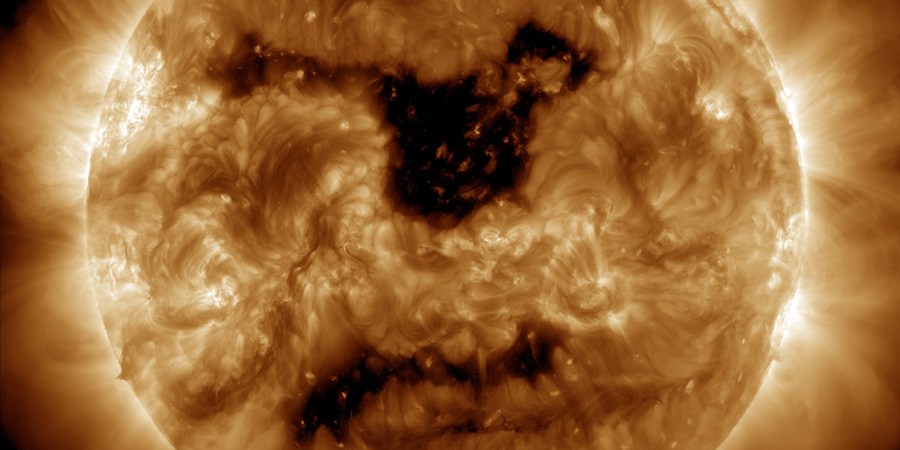
A coronal hole is facing our planet today which is sending a high speed solar wind stream towards us which could cause enhanced geomagnetic conditions (and thus aurora!) in the days ahead.
Coronal hole faces Earth
czwartek, 16 stycznia 2025 17:53 UTC
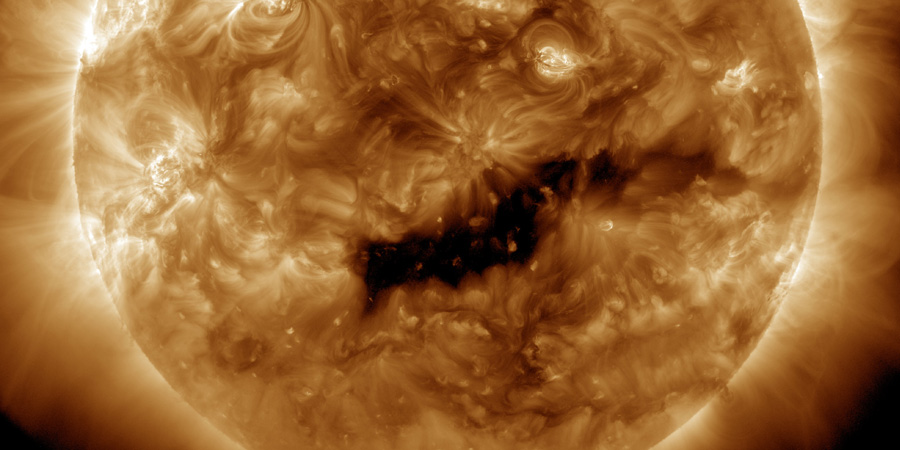
A coronal hole is facing our planet today which is sending a high speed solar wind stream towards us which could cause enhanced geomagnetic conditions (and thus aurora!) in the days ahead.
Sunspot region 3947, X-class solar flares
sobota, 4 stycznia 2025 17:46 UTC
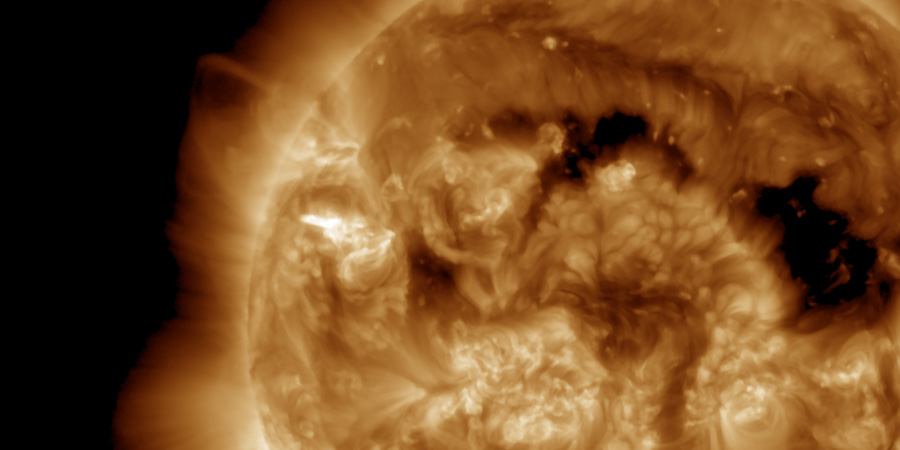
Solar activity has been on the rise again thanks to flaring activity coming from sunspot region 3947. It has been responsible for multiple M-class events and three low-level X-class events including an X1.8 solar flare today that peaked at 12:48 UTC.
Two earth-directed coronal mass ejections
poniedziałek, 30 grudnia 2024 19:31 UTC
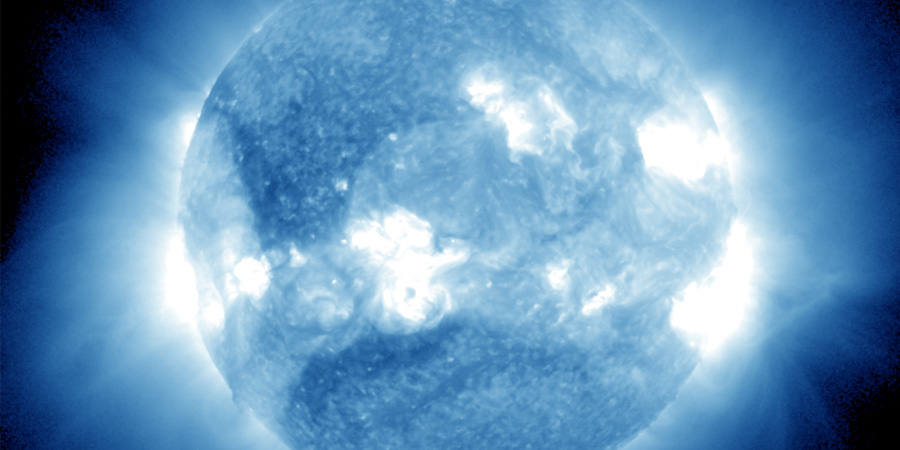
Our Sun remains fairly active today but no coronal mass ejections were launched today with a clear earth-directed component. We do however want to talk about yesterday's events again as more data and opinions have emerged...
Strong G3 geoamagnetic storm watch issued
niedziela, 29 grudnia 2024 23:09 UTC

It has been quite an eventful day on the Sun with 18 M-class solar flares and even an X1 solar flare. Sunspot region 3936 produced most of these events including the X-flare but also sunspot region 3938, 3939 and 3940 were contributors.
M9.0 solar flare with earth-directed CME
poniedziałek, 23 grudnia 2024 17:53 UTC
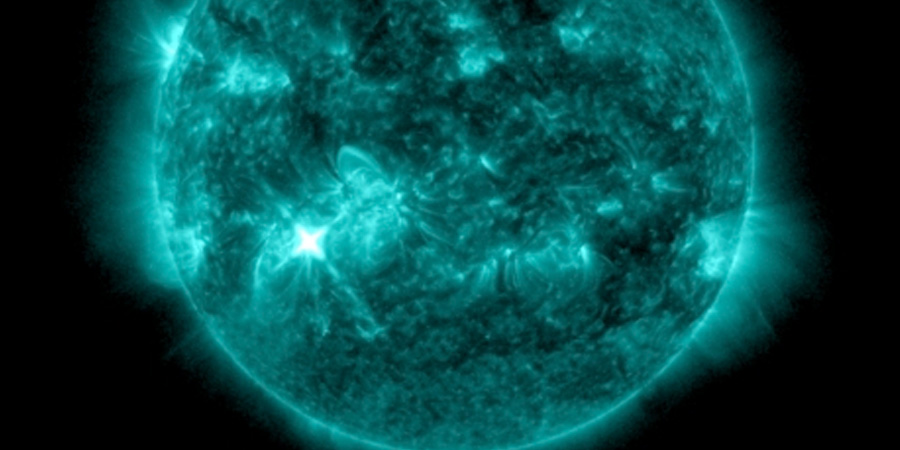
Sunspot region 3932 produced an M9.0 (R2-moderate) solar flare today which peaked at 11:12 UTC. The solar flare was fairly impulsive but it was associated with a Type II radio emission indicating the possible launch of a coronal mass ejection something which we can confirm now thanks to SOHO/LASCO coronagraph imagery.
X2.2 solar flare, SDO outage
niedziela, 8 grudnia 2024 14:12 UTC

Good morning everyone it's Sunday and the Sun is up early today with a banger! She unexpectedly produced an X2.2 solar flare which peaked at 09:06 UTC. It is sunspot region 3912 which was the source of this event.
Major far side eruption, S1 radiation storm
czwartek, 21 listopada 2024 20:44 UTC

The minor S1 solar radiation storm threshold was reached this evening. This is unfortunately not the result of a front side eruption but a major far side eruption behind the west limb. The Sun's magnetic field or Parker Spiral which wraps around the solar system carries the protons from the far side all the way to the Earth and beyond.
Coronal hole faces Earth
poniedziałek, 11 listopada 2024 15:54 UTC

Northern hemisphere sky watchers are having a cracking start to their aurora season. The past few months, we have had major solar flares, coronal mass ejection impacts and in general fairly high geomagnetic activity. Welcome solar maximum! So many people have already spotted aurora from their locations even those who do not live close to the arctic circle. Really amazing to see... and today we have more good news for you as we have a coronal hole facing our planet today which is sending a high speed solar wind stream towards our planet.
Najnowsze wiadomości
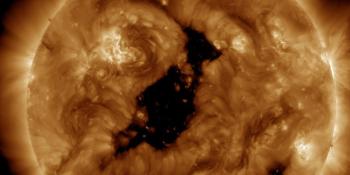
Coronal hole faces Earth
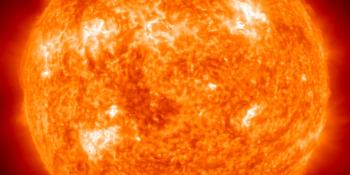
X1.5 solar flare
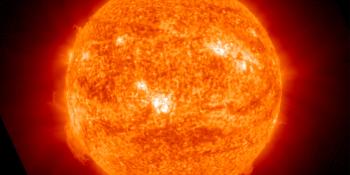
M2.7 solar flare, CME arrival possible
Najnowsze wiadomości z forum
Wesprzyj SpaceWeatherLive.com!
Wiele ludzi odwiedza stronę SpaceWeatherLive, aby śledzić aktywność słońca lub czy jest szansa na zobaczenie zorzy, ale większy ruch powoduje większe koszty utrzymania serwerów. Jeżeli podoba ci się strona SpaceWeatherLive i chciałbyś/chciałabyś wesprzeć ten projekt to możesz kupić subskrypcje aby uzyskać dostęp do strony bez reklam lub kupić darowiznę. Dzięki waszej pomocy, pomagacie utrzymać serwery SpaceWeatherLive!



Fakty na temat pogody kosmicznej
| Ostatnie rozbłyski klasy X | 2026/06/03 | X1.0 |
| Ostatnie rozbłyski klasy M | 2026/06/03 | M7.9 |
| Ostatnia burza geomagnetyczna | 2026/05/16 | Kp6- (G2) |
| Dni bez plam słonecznych | |
|---|---|
| Ostatnie 365 dni | 3 Dni |
| 2026 | 3 Dni (2%) |
| Ostatni dzień bez plamy słonecznej | 2026/02/24 |
| Średnia miesięczna liczba plam słonecznych | |
|---|---|
| kwietnia 2026 | 79.3 -6.6 |
| czerwca 2026 | 139.5 +60.2 |
| Ostatnie 30 dni | 97.8 +5.2 |