Co to jest filament?
Solar filaments are clouds of ionized gas above the solar surface squeezed between magnetic regions of opposite polarity. Being cooler and denser than the plasma underneath and their surroundings, they appear as dark lines when seen on the solar disk. When a solar filament is seen near the solar limb with the blackness of space as background it is called a "prominence" instead.
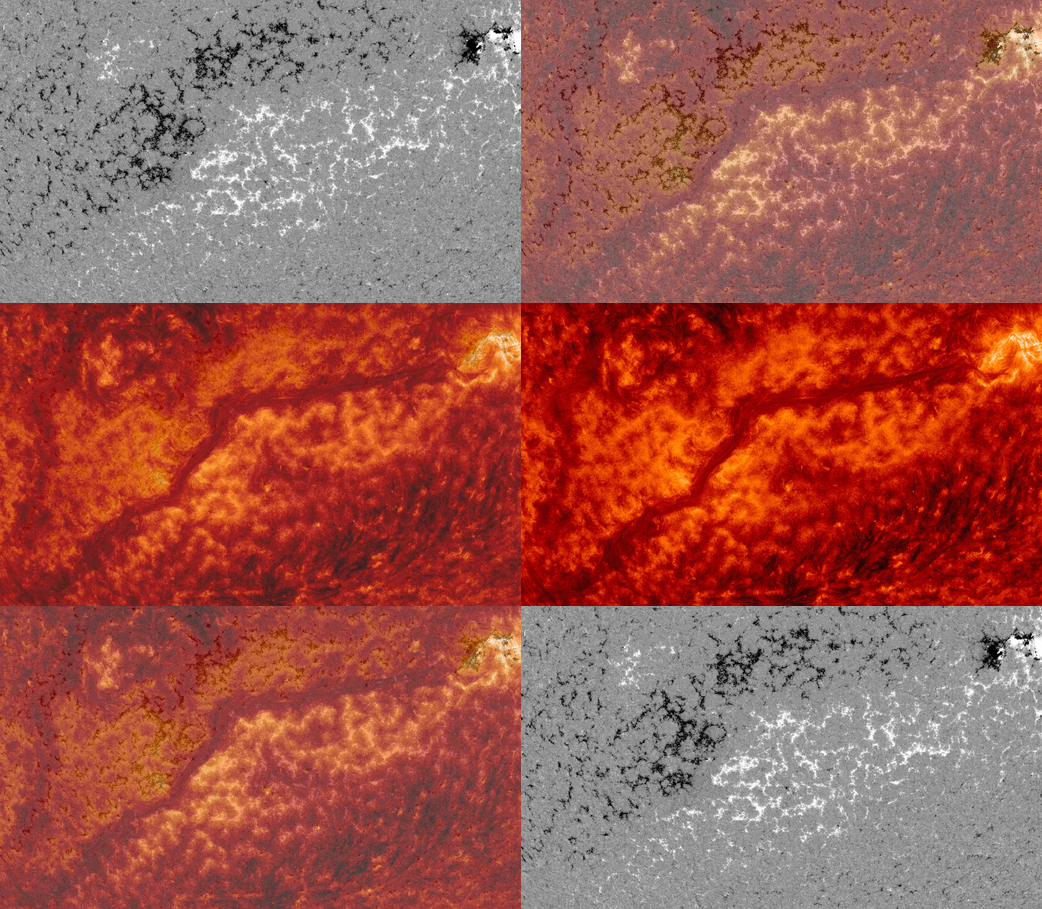
Obraz: A filament as seen by NASA’s Solar Dynamics Observatory which is suspended between two areas of opposite magnetic polarity.
Solar filaments can last a long time before they disappear. Some survive for weeks! When solar filaments become unstable they can either fall back onto the Sun or erupt into space, sending a coronal mass ejection away from the Sun which can come towards Earth if the solar filament was well positioned. Just like coronal mass ejections produced by solar flares, a coronal mass ejection from a solar filament could also very well cause a geomagnetic storm on Earth. Space weather forecasters keep an eye on these filaments as they can be just as important as solar flares!
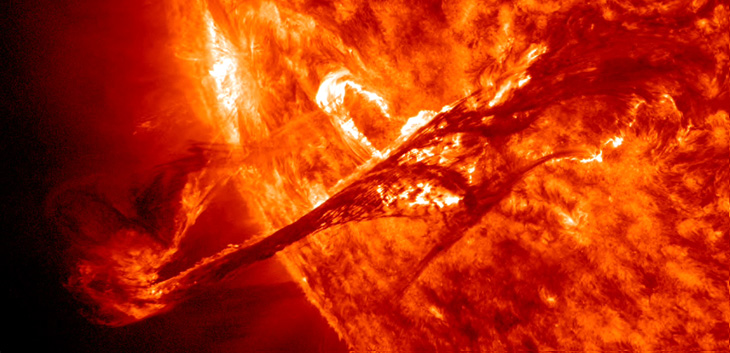
Obraz: A gorgeous filament eruption as seen by NASA’s Solar Dynamics Observatory.
Najnowsze wiadomości
Coronal hole faces Earth
X1.5 solar flare
M2.7 solar flare, CME arrival possible
Najnowsze wiadomości z forum
Wesprzyj SpaceWeatherLive.com!
Wiele ludzi odwiedza stronę SpaceWeatherLive, aby śledzić aktywność słońca lub czy jest szansa na zobaczenie zorzy, ale większy ruch powoduje większe koszty utrzymania serwerów. Jeżeli podoba ci się strona SpaceWeatherLive i chciałbyś/chciałabyś wesprzeć ten projekt to możesz kupić subskrypcje aby uzyskać dostęp do strony bez reklam lub kupić darowiznę. Dzięki waszej pomocy, pomagacie utrzymać serwery SpaceWeatherLive!



Fakty na temat pogody kosmicznej
| Ostatnie rozbłyski klasy X | 2026/06/03 | X1.0 |
| Ostatnie rozbłyski klasy M | 2026/06/03 | M7.9 |
| Ostatnia burza geomagnetyczna | 2026/05/16 | Kp6- (G2) |
| Dni bez plam słonecznych | |
|---|---|
| Ostatnie 365 dni | 3 Dni |
| 2026 | 3 Dni (2%) |
| Ostatni dzień bez plamy słonecznej | 2026/02/24 |
| Średnia miesięczna liczba plam słonecznych | |
|---|---|
| kwietnia 2026 | 79.3 -6.6 |
| czerwca 2026 | 139.5 +60.2 |
| Ostatnie 30 dni | 97.8 +5.2 |