Avaruussääennuste - Perusteet
Julkaistu: 2026 Jun 09 0030 UTC
Laatija: Yhdysvaltain kauppaministeriö, NOAA, Space Weather Prediction Center ja käsittelijä SpaceWeatherLive.com
Auringon aktiivisuus
24 h yhteenveto
Solar activity remained at low levels with the two largest flares of the day originating from Region 4465 (N11E70, Dao/beta): a C7.2 at 08/0249 UTC and a C4.5/Sf at 08/0510 UTC. There are eight active regions on disk, most of them remained stable or showed some decay in area. Region 4464 (S12E24, Dac/beta-gamma) became more complex magnetically, gained additional intermediary spots during the period, and was the source of a C1.2 at 08/1733 UTC. No new Earth-directed CMEs were observed in available coronagraph imagery.Ennuste
Isolated M-class flares are likely, with a slight chance for X-class flares, through 11 June primarily due to the flare potential exhibited by Regions 4456 (N17W61, Dai/beta), 4462 (N15W07, Dsi/beta), 4464 and 4465.Energiset hiukkaset
24 h yhteenveto
The greater than 2 MeV electron flux at geosynchronous orbit reached high levels with a peak flux of 1,310 pfu at 08/1340 UTC. The greater than 10 MeV proton flux remained at background levels during the period.Ennuste
The greater than 2 MeV electron flux levels at geosynchronous orbit are likely to continue reaching high levels through 10 June, returning to moderate-low levels on 11 June. The greater than 10 MeV proton flux is expected to remain at background levels through 11 June.Aurinkotuuli
24 h yhteenveto
Solar wind parameters suggested a glancing blow from the 06 June CME that was anticipated to arrive during the period. Solar wind speeds decreased from about 600 km/s to below 450 km/s, while the total Interplanetary Magnetic Field (IMF) strength showed a slight oscillation around 5nT. All the 3 components of the IMF vector became negative between 08/0300 UTC and 08/1400 UTC, with Bz reaching as south as -4 nT around 08/0919 UTC. The Phi angle remained mostly in the positive sector during the day.Ennuste
Analysis of the solar wind parameters, along with the suprathermal ions and electrons data from instruments at L1, suggested that the 06 June CME glancing passage near Earth already occurred on 08 June, reducing our confidence in further impacts on the next days. Therefore, background solar wind is expected until 11 June, when a -CH HSS is anticipated to become geoeffective.Geoavaruus
24 h yhteenveto
Geomagnetic field activity was at quiet to unsettled levels during the past 24h.Ennuste
The geomagnetic field is expected to be at quiet to active levels on 09 June, quiet to unsettled levels on 10 Jun, and active levels on 11 June (due to anticipated -CH HSS effects).Uusimmat uutiset
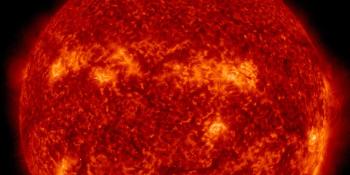
torstaina, 4. kesäkuuta 2026
G3 geomagnetic storm watch for 4 and 5 June
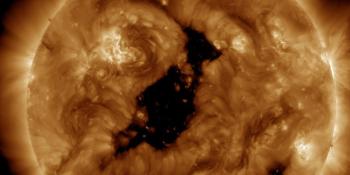
keskiviikkona, 13. toukokuuta 2026
Coronal hole faces Earth
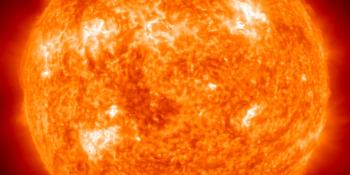
maanantaina, 30. maaliskuuta 2026
X1.5 solar flare
Viimeisimmät foorumiviestit
Space Weather Memes 845M1.89 CME (06-06-2026) 153AR4465 9Noctilucent clouds 38Ask your obscure/"stupid" space weather questions. 513
Lisää aiheitaTue SpaceWeatherLive.com -sivustoa!
Monet ihmiset tulevat SpaceWeatherLiveen seuraamaan Auringon toimintaa tai olisiko mahdollisuus nähdä revontulia, mutta suuremman liikenteen myötä palvelimien ylläpitokustannukset kasvavat. Jos pidät SpaceWeatherLivestä ja haluat tukea hanketta, voit tilata mainoksettomat sivustot tai harkita lahjoitusta. Sinun avullasi voimme pitää SpaceWeatherLiven verkossa!


Avaruussäätiedot
| Viimeisin X-flare | 03/06/2026 | X1.0 |
| Viimeisin M-flare | 06/06/2026 | M1.8 |
| Viimeisin geomagneettinenmyrsky | 05/06/2026 | Kp6+ (G2) |
| Pilkuttomat vuorokaudet | |
|---|---|
| Viimeiset 365 päivää | 3 päivää |
| 2026 | 3 päivää (2%) |
| Viimeisin auringonpilkuton vuorokausi | 24/02/2026 |
| Kuukausittainen auringonpilkkuluku | |
|---|---|
| toukokuuta 2026 | 101.4 +22.1 |
| kesäkuuta 2026 | 140.7 +39.3 |
| Viimeiset 30 päivää | 105.4 +14.4 |
Tämä päivä historiassa*
Revontulet historiassa tänä päivänä
Tältä päivältä historiassa ei ole havaintoja. Jos olet havainnut revontulia ja sinulla on upeita kuvia esiteltäväksi, lähetä havaintosi nyt!
Lähetä revontulihavaintosi