SIDC:n päivittäinen tiedote Auringon ja geomagneettisesta aktiivisuudesta.
Julkaistu: 2026 Jun 12 1231 UTC
SIDC ennuste
Auringon flarepurkaukset
C-class flares expected, (probability >=50%)
Geomagnetismi
Active conditions expected (A>=20 or K=4)
Protonit
Quiet
| 10cm vuo | Ap | |
|---|---|---|
| 12 Jun 2026 | 128 | 031 |
| 13 Jun 2026 | 128 | 027 |
| 14 Jun 2026 | 130 | 029 |
Auringon aktiiviset alueet ja flarepurkaukset
Solar flaring activity was low over the past 24 hours, with several C-class flares recorded. The largest flare was a C5.2 flare (SIDC Flare 7934), peaking at 02:14 UTC on June 12, associated with SIDC Sunspot Group 870 (NOAA Active Region 4465; magnetic type beta- gamma). There are currently five numbered active regions on the visible solar disk. SIDC Sunspot Group 870, which remains the largest and most complex active region on the solar disk, was the main driver of the flaring activity observed over the past 24 hours. Low flaring activity was also produced by active regions behind the east limb near S08E89 and by an unspotted region near S21W51. The remaining active regions are relatively simple (magnetic type alpha or beta) and did not produce any significant flaring activity. Solar flaring activity is expected to remain low over the next 24 hours, with C-class flares very likely and a chance for M-class flares.
Koronan massapurkaukset
No Earth-directed CMEs have been detected in the available coronagraph imagery over the past 24 hours.
Aurinkotuuli
Over the past 24 hours, solar wind parameters became slightly disturbed, likely due to the arrival of a high-speed stream from the equatorial negative polarity coronal hole (SIDC Coronal Hole 147). The interplanetary magnetic field increased from about 6 nT to 15 nT by 01:20 UTC on June 12, later decreasing again to about 6 nT. The southward component of the interplanetary magnetic field (Bz) reached -13 nT. The solar wind speed increased from 370 km/s to about 630 km/s. The magnetic field orientation was variable at the beginning of the period and has been predominantly in the negative sector (field directed towards the Sun) since 16:00 UTC on June 11. Solar wind conditions are expected to remain slightly elevated over the next day while Earth remains under the influence of the high-speed stream, with a chance of a weak enhancement on June 13 due to possible glancing blow arrivals from the June 9 and June 11 CMEs (SIDC CMEs 673-675).
Geomagnetismi
Geomagnetic conditions reached minor storm levels globally (NOAA Kp = 5) between 18:00 and 21:00 UTC on June 11, likely due to a prolonged period of southward Bz. Locally over Belgium, unsettled to active conditions were observed (K-Bel = 3 to 4). Mostly unsettled to active geomagnetic conditions are expected over the next 24 hours, with a chance of isolated minor storm periods in response to the ongoing high-speed stream influence from the negative polarity coronal hole (SIDC Coronal Hole 147). On June 13, minor to moderate storm levels may be reached due to possible glancing blow arrivals from the June 9 and June 11 CMEs (SIDC CMEs 673-675).
Protonivuon tasot
The greater than 10 MeV proton flux, as measured by GOES-18, was below the 10pfu threshold level over the past 24 hours and is expected to remain so over the next 24 hours.
Elektronivuot geostationaarisella kiertoradalla
The greater than 2 MeV electron flux, as measured by GOES-19, remained below the 1000 pfu alert threshold over the past 24 hours. The greater than 2 MeV electron flux is expected to exceed the 1000 pfu alert threshold over the next 24 hours in response to the high-speed stream influence. The 24-hour electron fluence was at normal to moderate levels and is expected to remain at these levels over the next 24 hours.
Tämän päivän arvioitu kansainvälinen auringonpilkkuluku (ISN): 078, joka perustuu 14 asemiin.Aurinkoindeksit 11 Jun 2026
| Wolf luku Catania | 088 |
| 10 cm aurinkovuo | 127 |
| AK Chambon La Forêt | 032 |
| AK Wingst | 019 |
| Arvioitu Ap | 020 |
| Arvioitu kansainvälinen auringonpilkkuluku | 092 - Perustuu 25 asemaan |
Yhteenveto merkittävistä tapahtumista
| Vuorokausi | Alku | Maksimi | Loppu | Loc | Voimakkuus | OP | 10cm | Catania/NOAA | Radiopurkaustyypit | |
|---|---|---|---|---|---|---|---|---|---|---|
| Ei mitään | ||||||||||
Solar Influences Data analysis Centerin toimittamat tiedot© - SIDC - Käsitellyt SpaceWeatherLive
Uusimmat uutiset
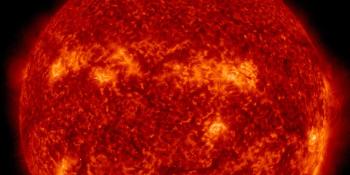
G3 geomagnetic storm watch for 4 and 5 June
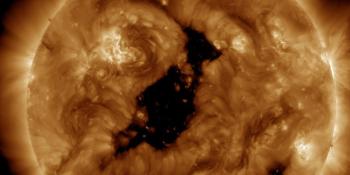
Coronal hole faces Earth
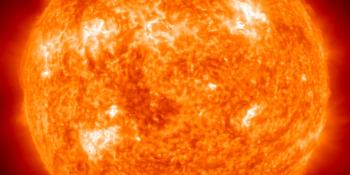
X1.5 solar flare
Viimeisimmät foorumiviestit
Tue SpaceWeatherLive.com -sivustoa!
Monet ihmiset tulevat SpaceWeatherLiveen seuraamaan Auringon toimintaa tai olisiko mahdollisuus nähdä revontulia, mutta suuremman liikenteen myötä palvelimien ylläpitokustannukset kasvavat. Jos pidät SpaceWeatherLivestä ja haluat tukea hanketta, voit tilata mainoksettomat sivustot tai harkita lahjoitusta. Sinun avullasi voimme pitää SpaceWeatherLiven verkossa!



Avaruussäätiedot
| Viimeisin X-flare | 03/06/2026 | X1.0 |
| Viimeisin M-flare | 06/06/2026 | M1.8 |
| Viimeisin geomagneettinenmyrsky | 11/06/2026 | Kp5 (G1) |
| Pilkuttomat vuorokaudet | |
|---|---|
| Viimeiset 365 päivää | 3 päivää |
| 2026 | 3 päivää (2%) |
| Viimeisin auringonpilkuton vuorokausi | 24/02/2026 |
| Kuukausittainen auringonpilkkuluku | |
|---|---|
| toukokuuta 2026 | 101.4 +22.1 |
| kesäkuuta 2026 | 127.7 +26.3 |
| Viimeiset 30 päivää | 110.7 +16.8 |