Geostationary Operational Environmental Satellite (GOES)
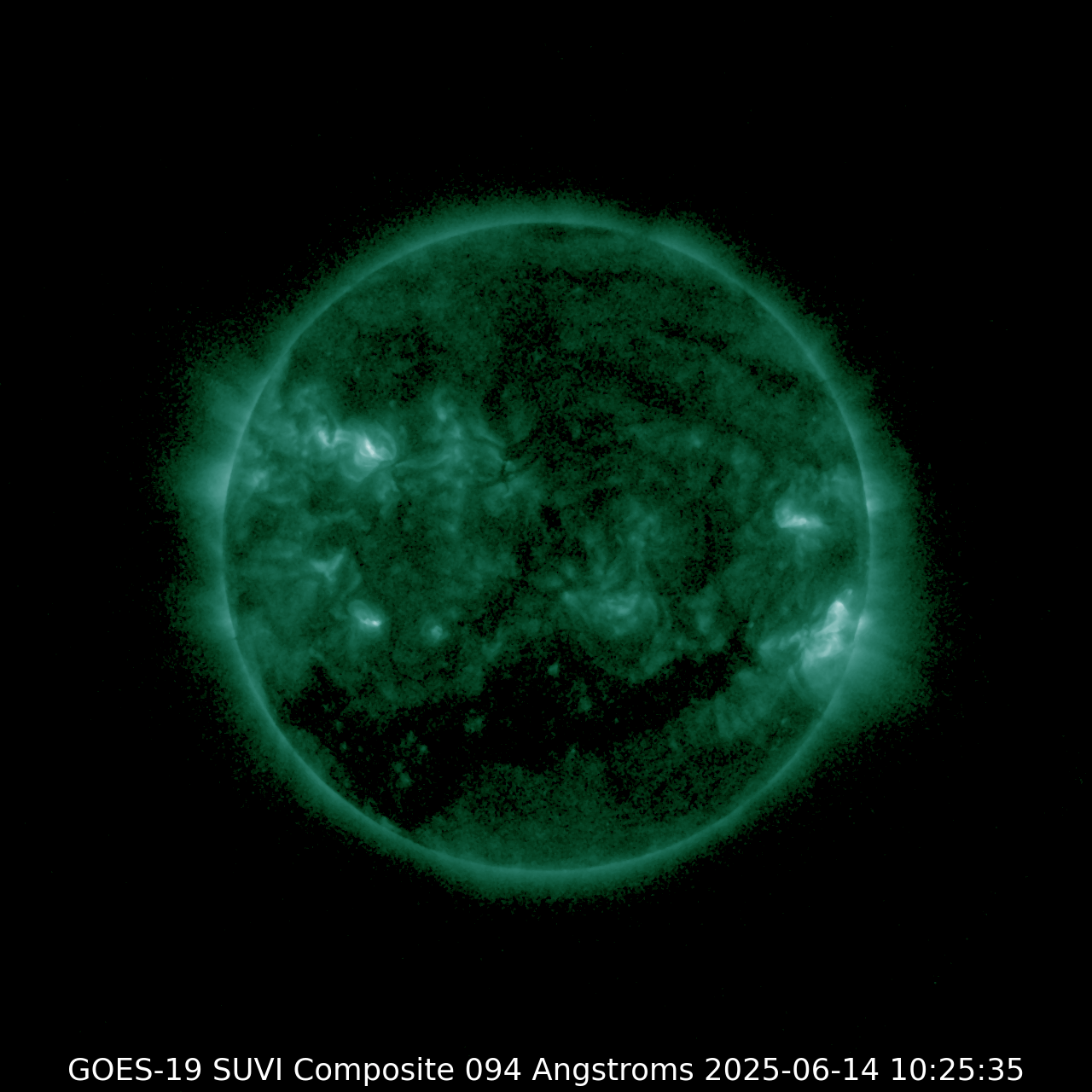
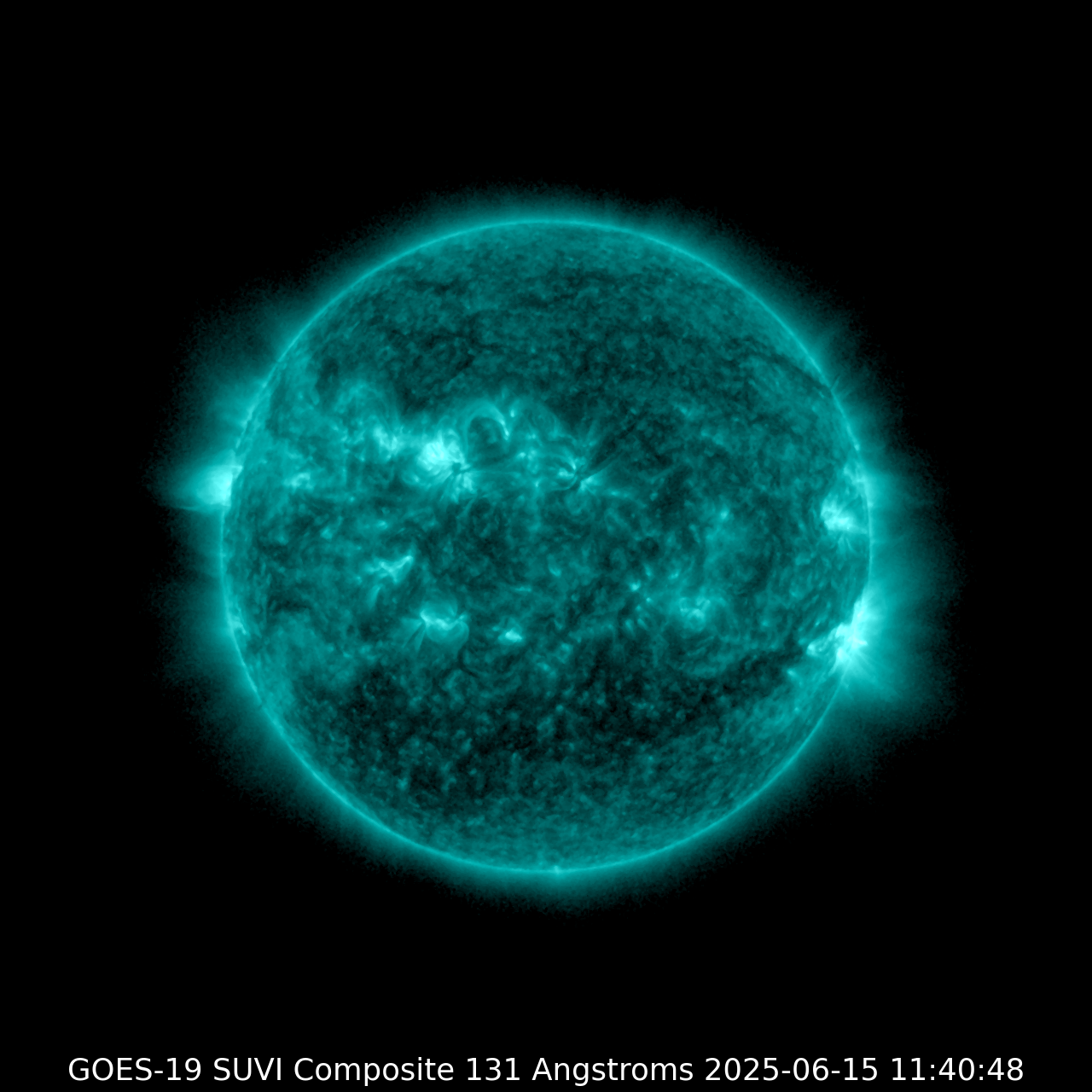
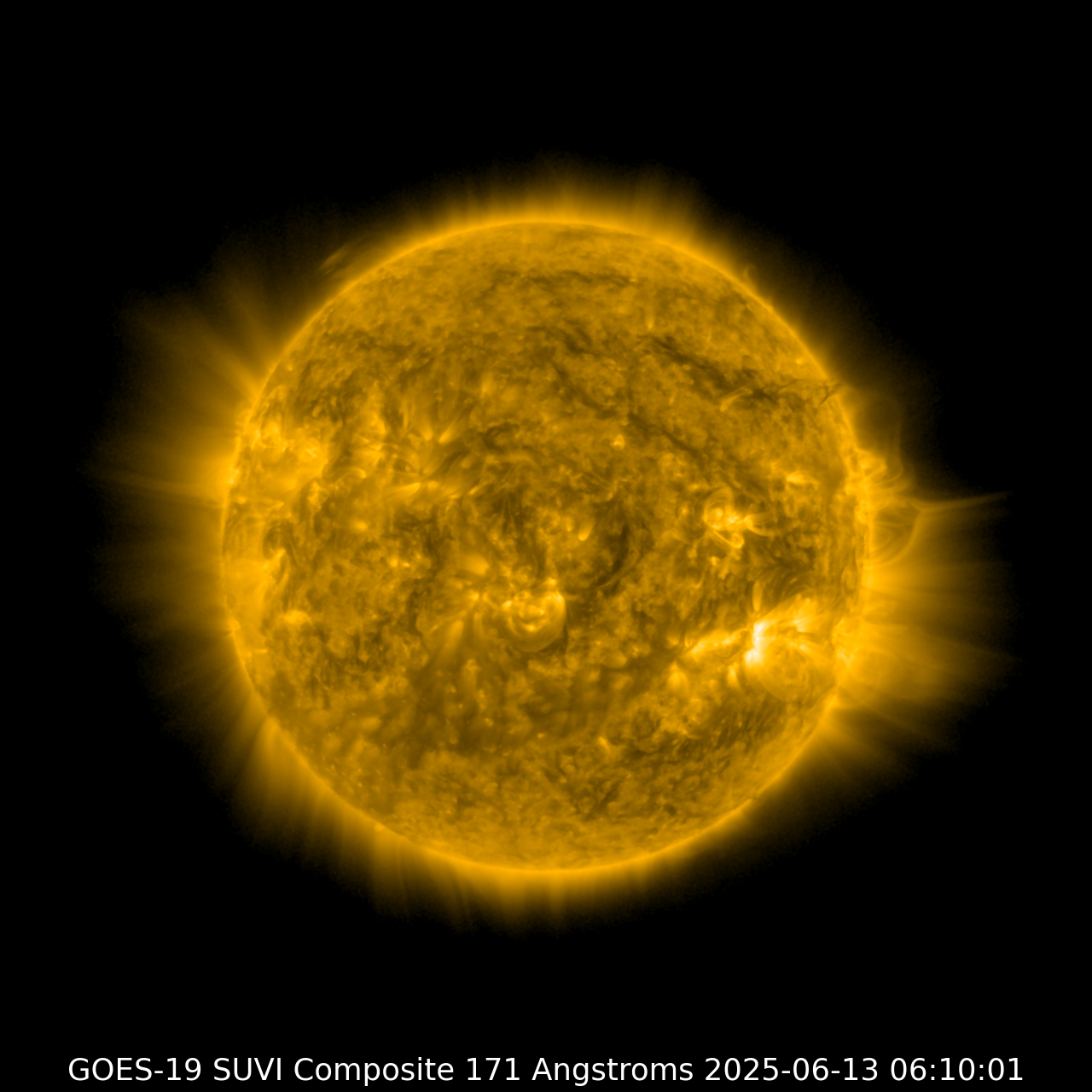
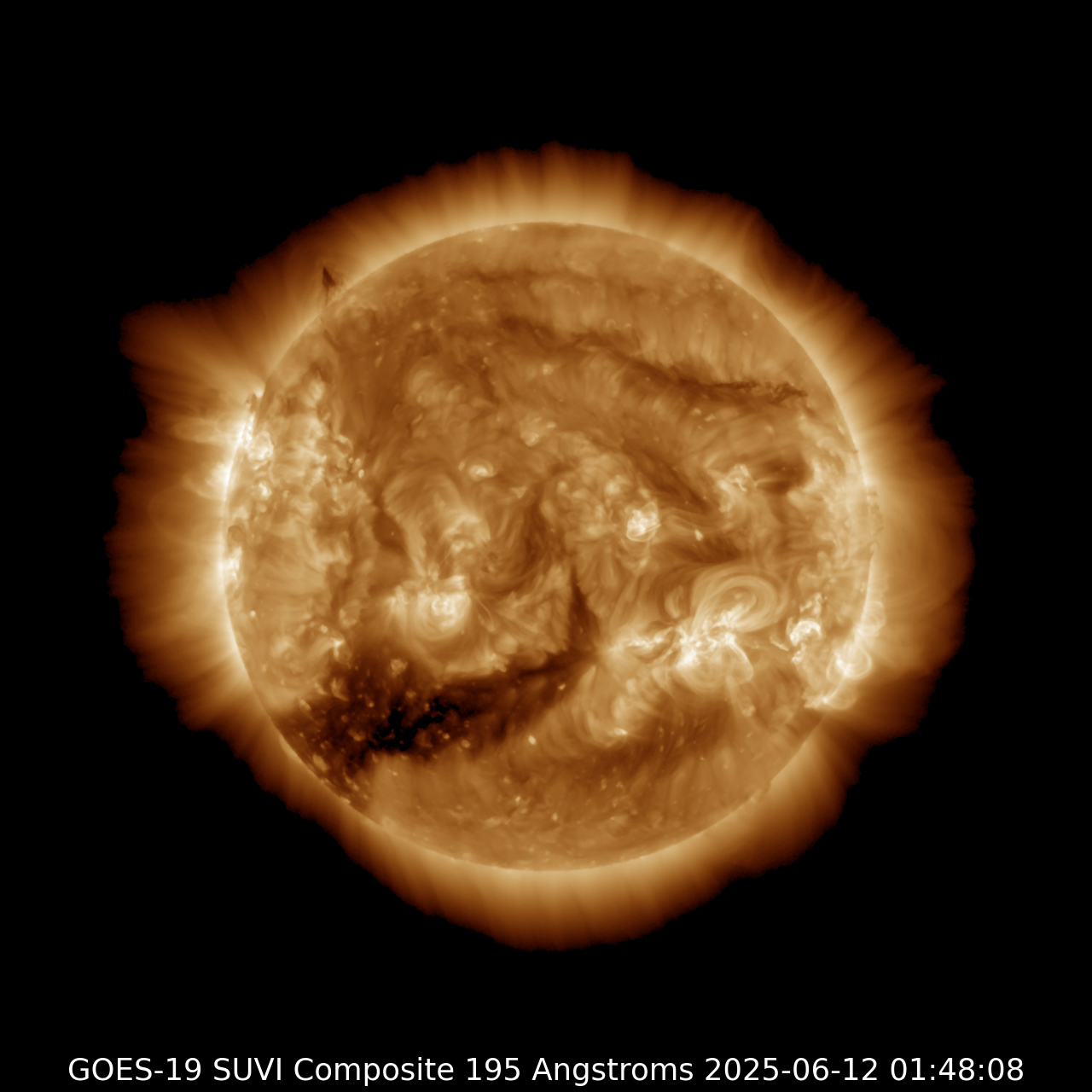
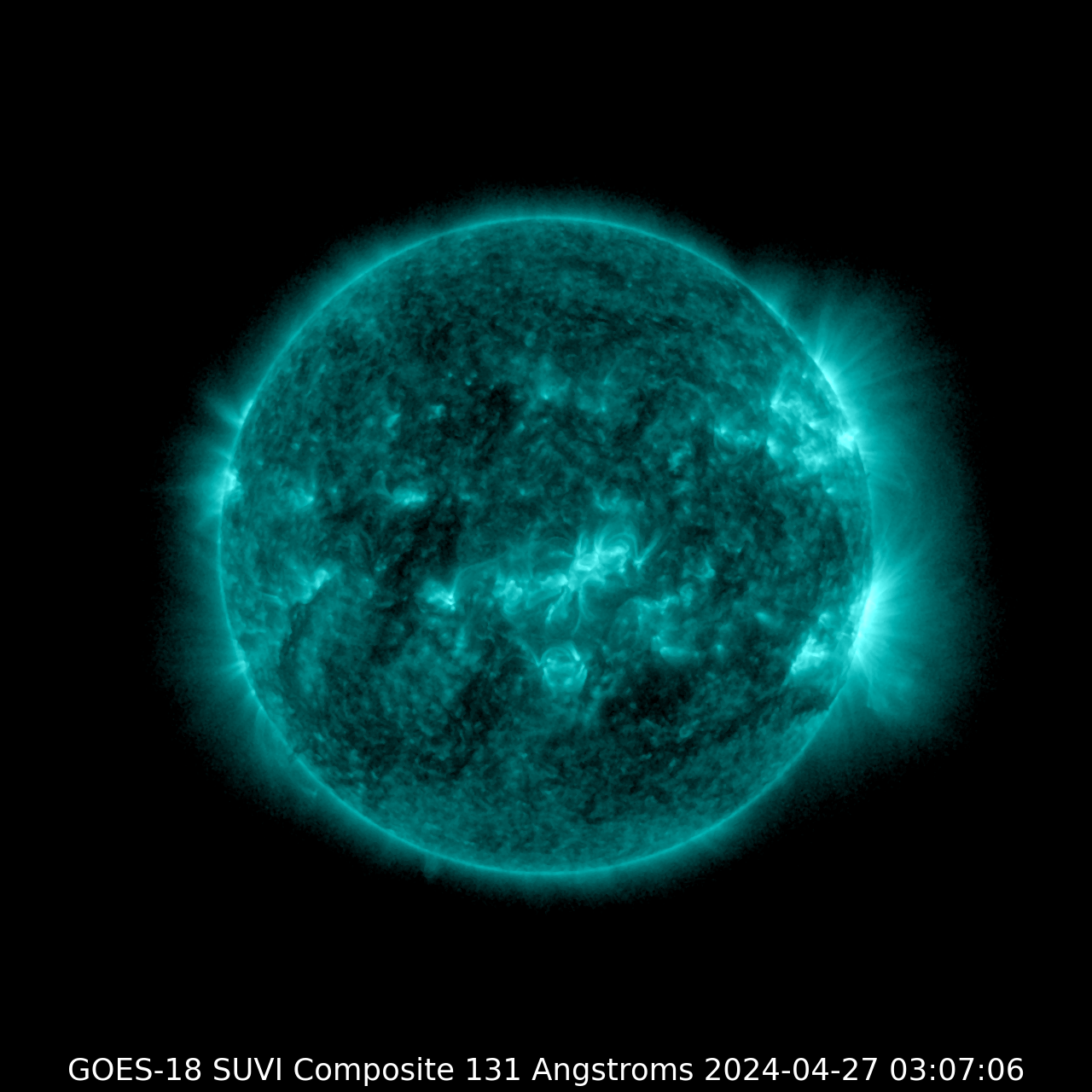
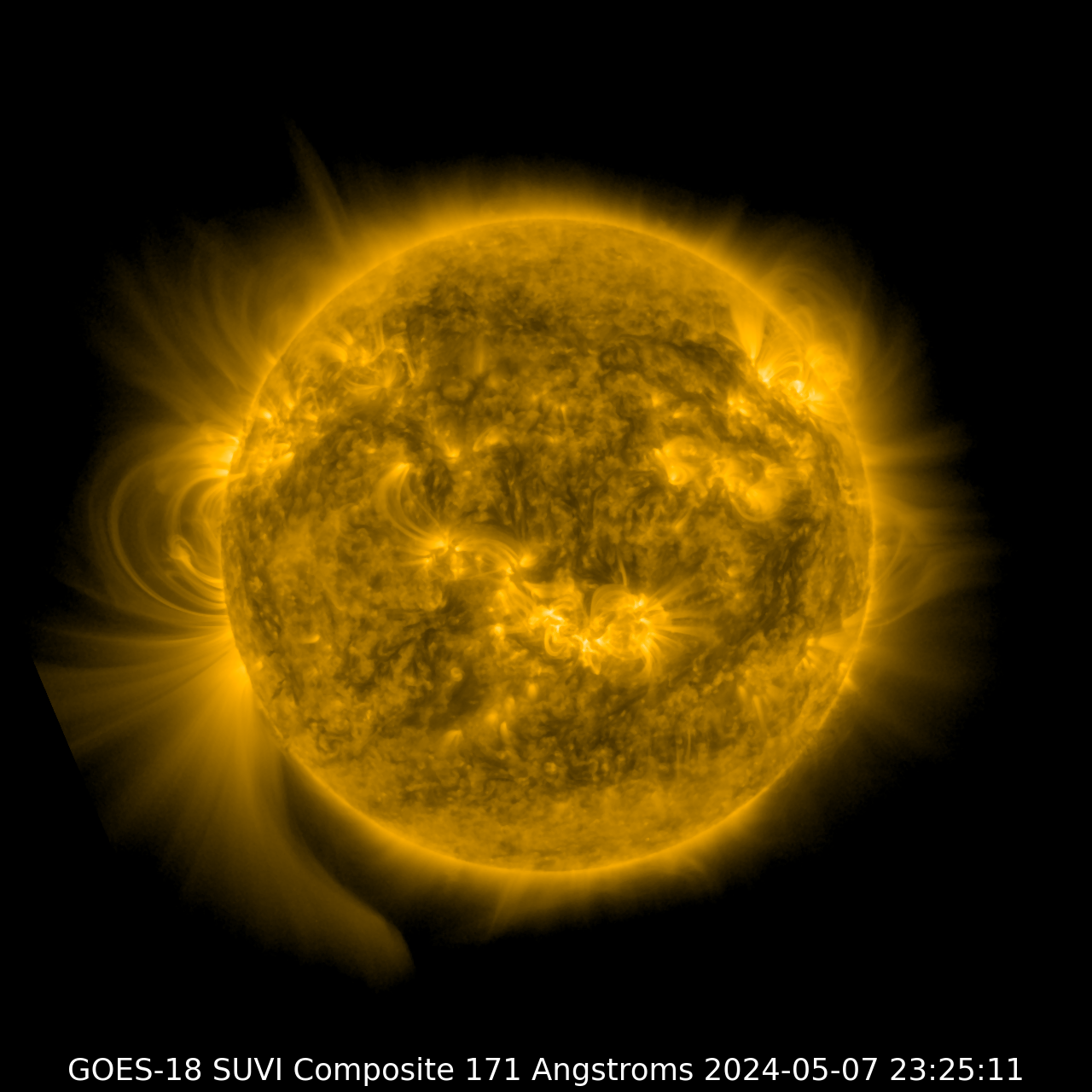
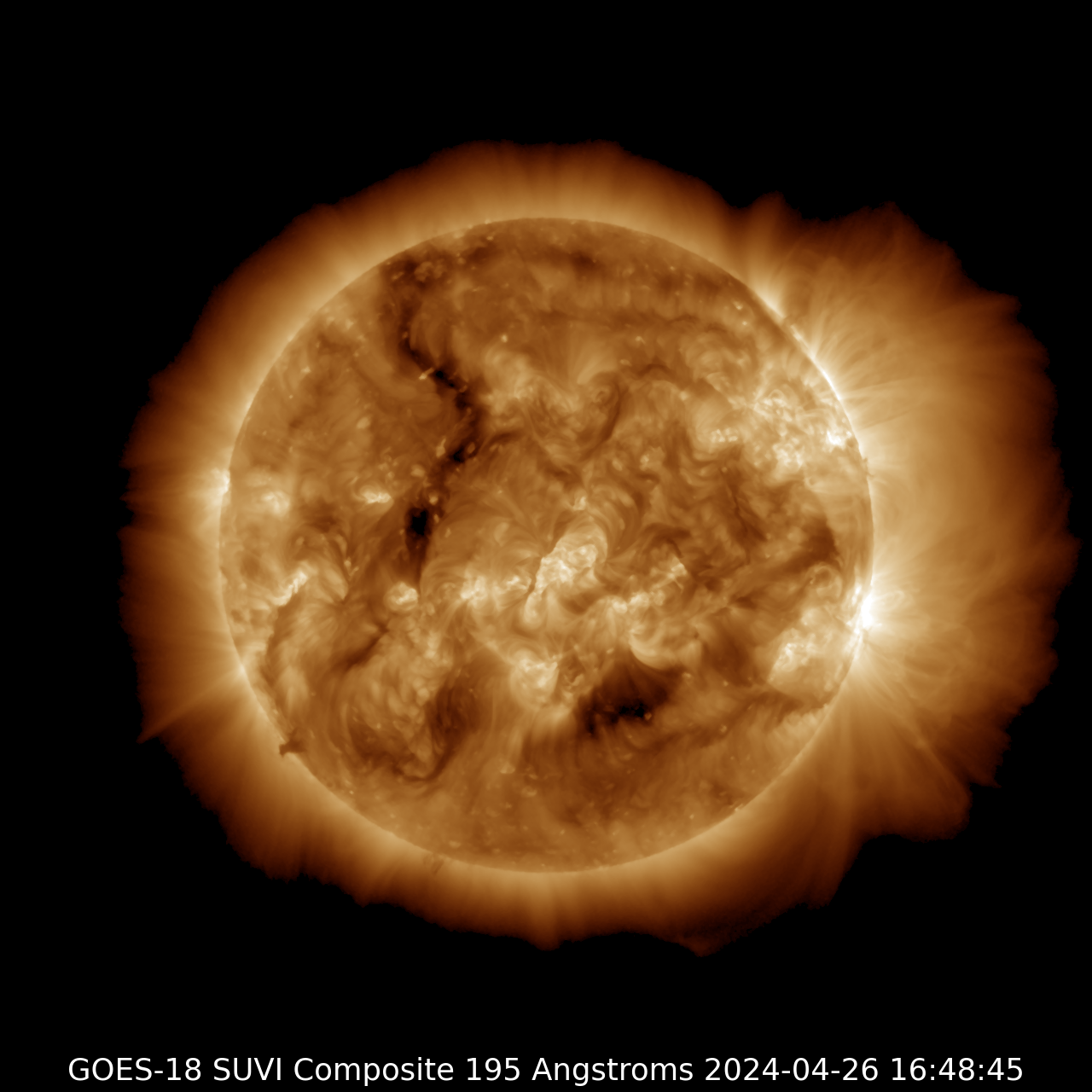
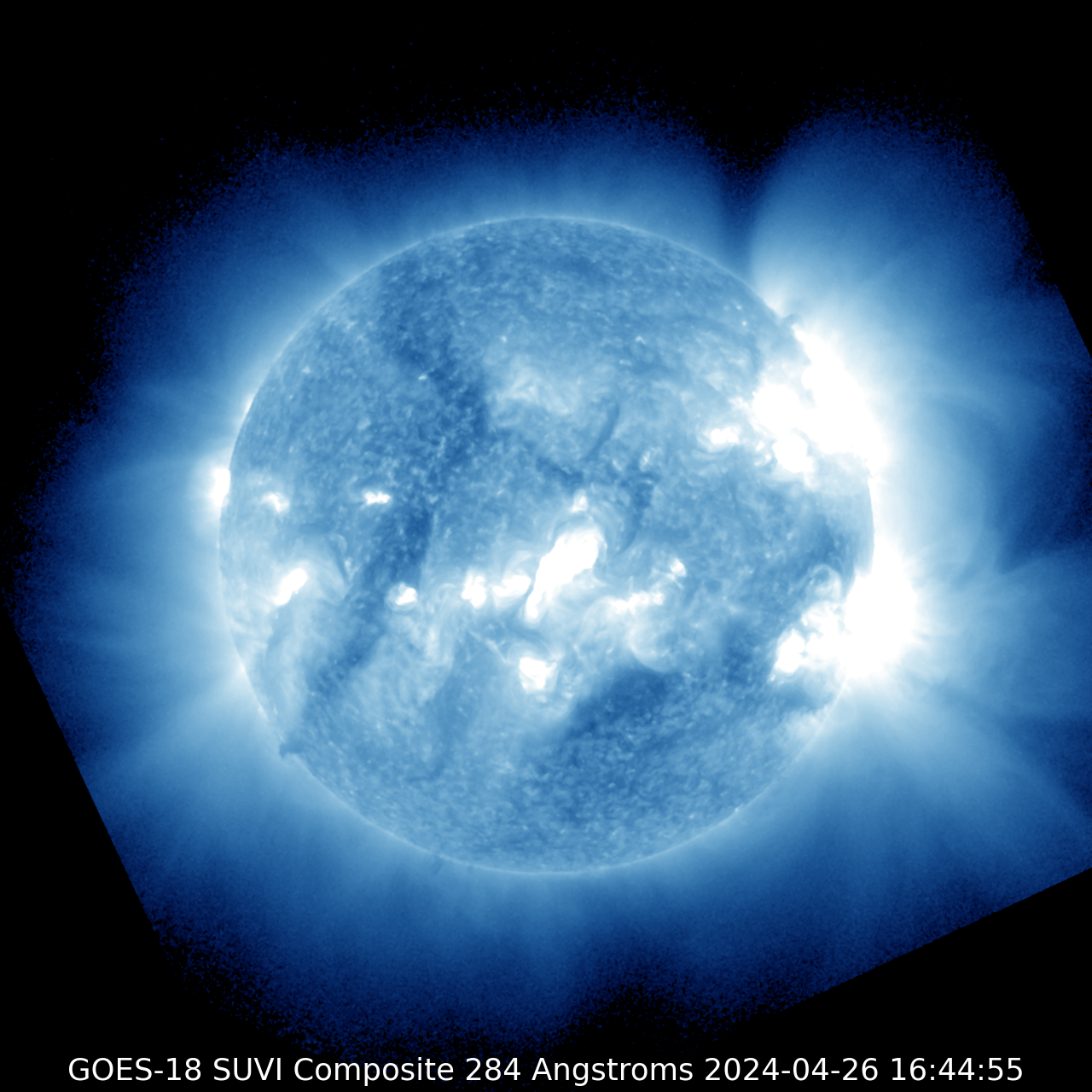
El sistema Geoestacionario de Satélites Ambientales Operativos (GOES) es una serie de satélites geosincrónicos operados por la Administración Nacional Oceánica y Atmosférica de los Estados Unidos. El sistema GOES nos proporciona imágenes solares, datos de magnetómetros, datos de rayos X solares y datos sobre protones solares de alta energía en la Tierra. A continuación encontrará imágenes solares en una multitud de longitudes de onda de diferentes misiones del GOES.
GOES-19 CCOR-1
The Compact Coronagraph-1 (CCOR-1) instrument on board of GOES-19, will image the Sun in the visible wavelength range from 480nm to 730nm. In order to image the much fainter corona, the CCOR-1 instrument will use an occulting disk to block the light originating from the much brighter photosphere of the Sun. As a result, the field of view for CCOR-1 will span from 3.7 solar radii out to 17 solar radii with a spatial resolution of ~50 arcseconds.
GOES-19
SUVI 094
| SUVI 131
|
SUVI 171
| SUVI 195
|
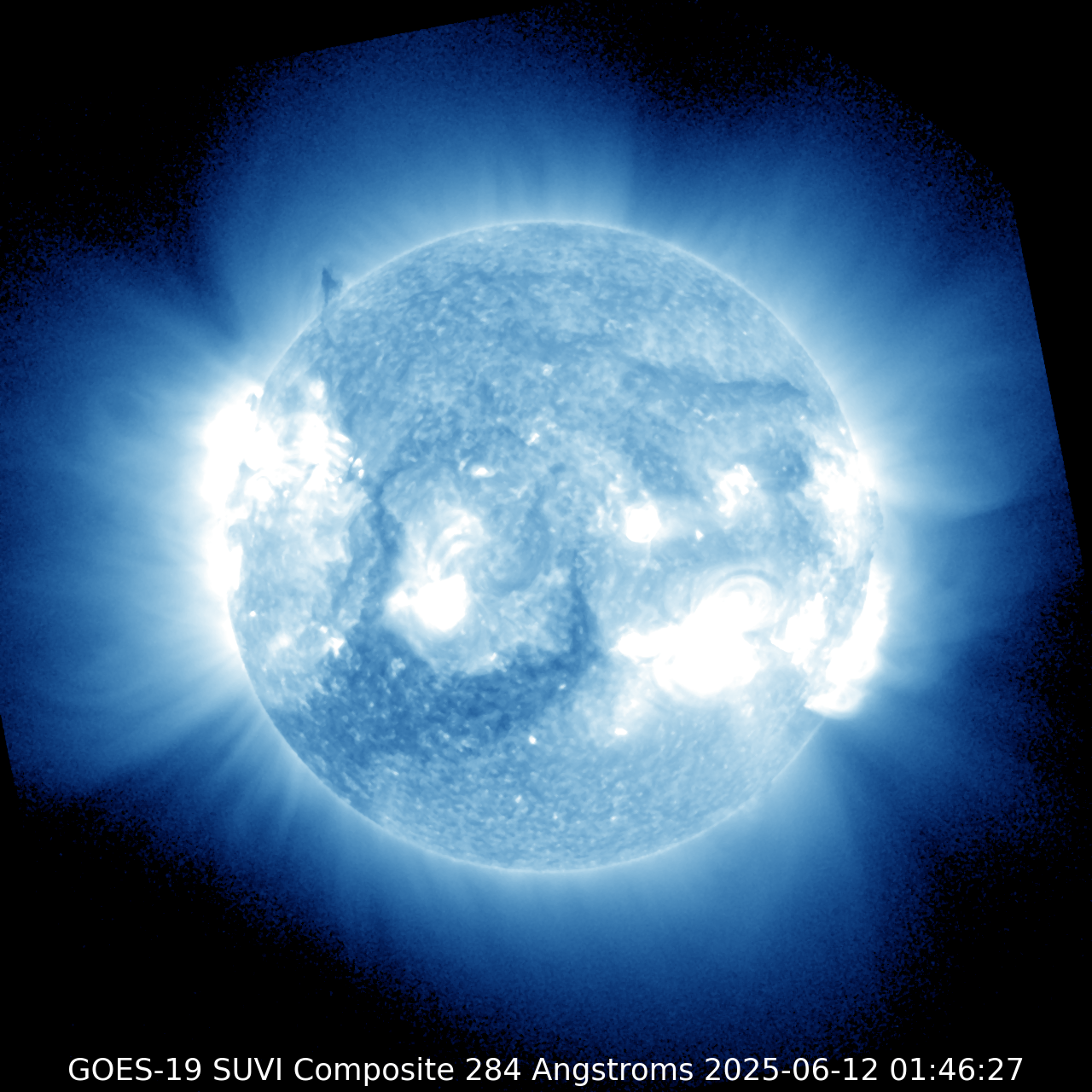
SUVI 284
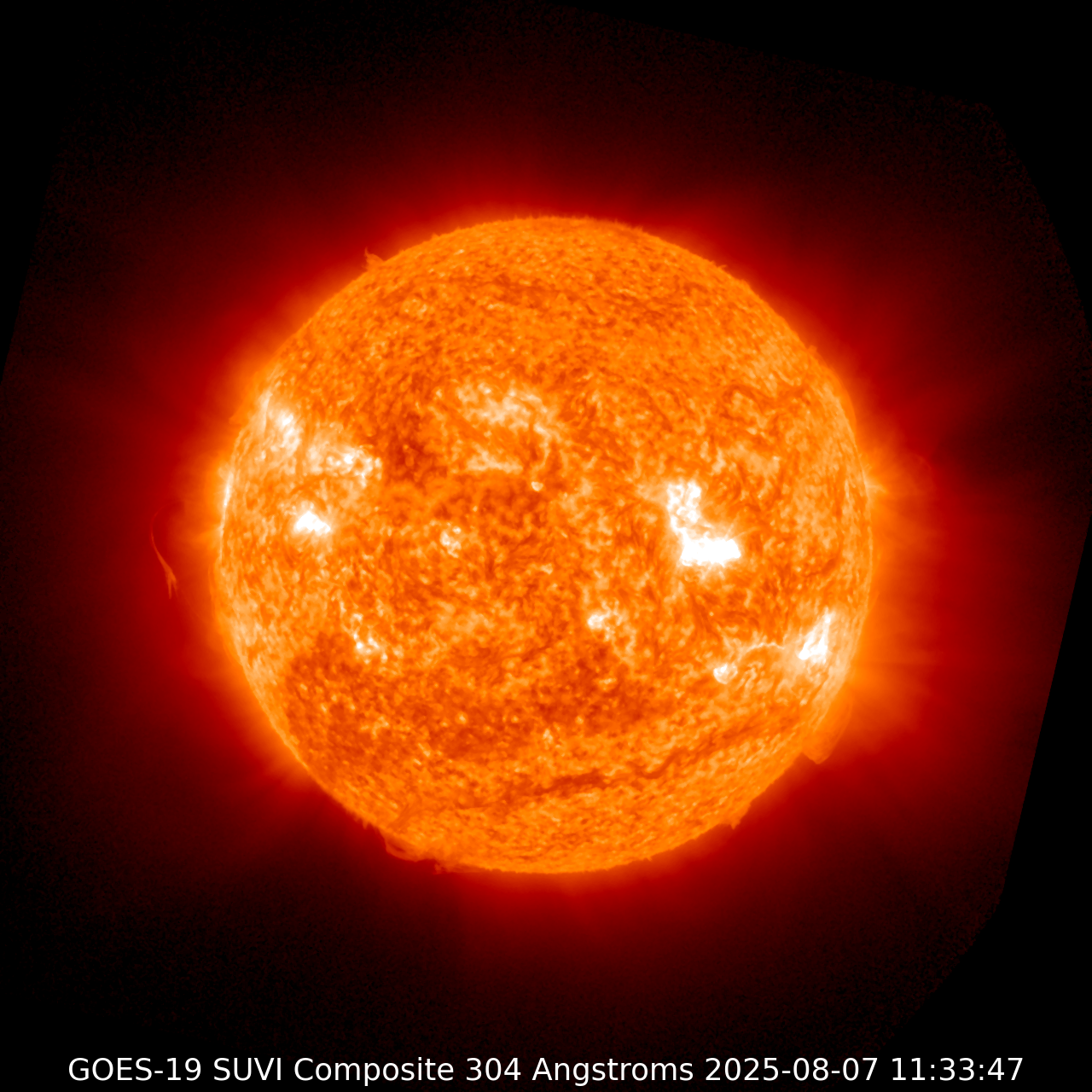
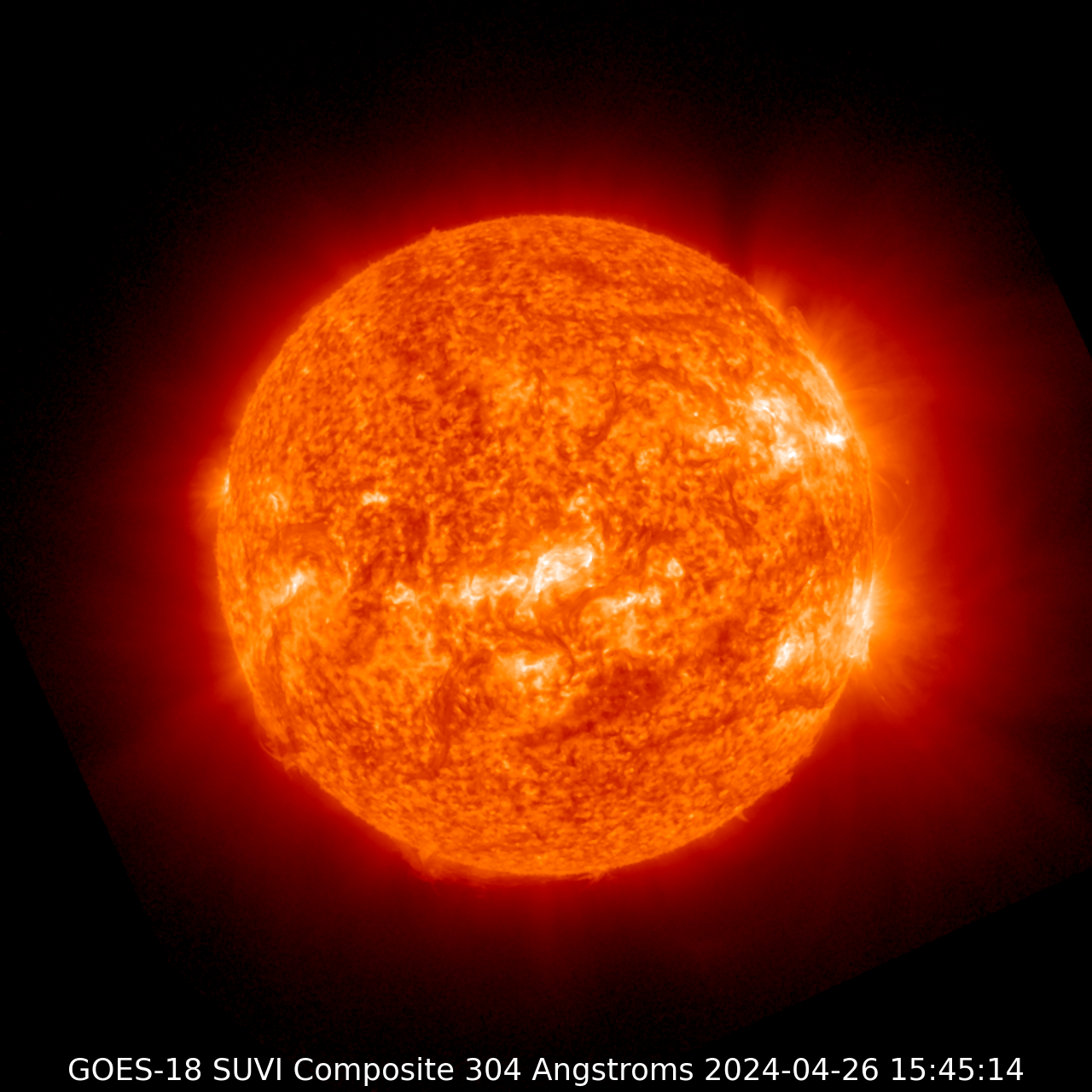
| SUVI 304
|
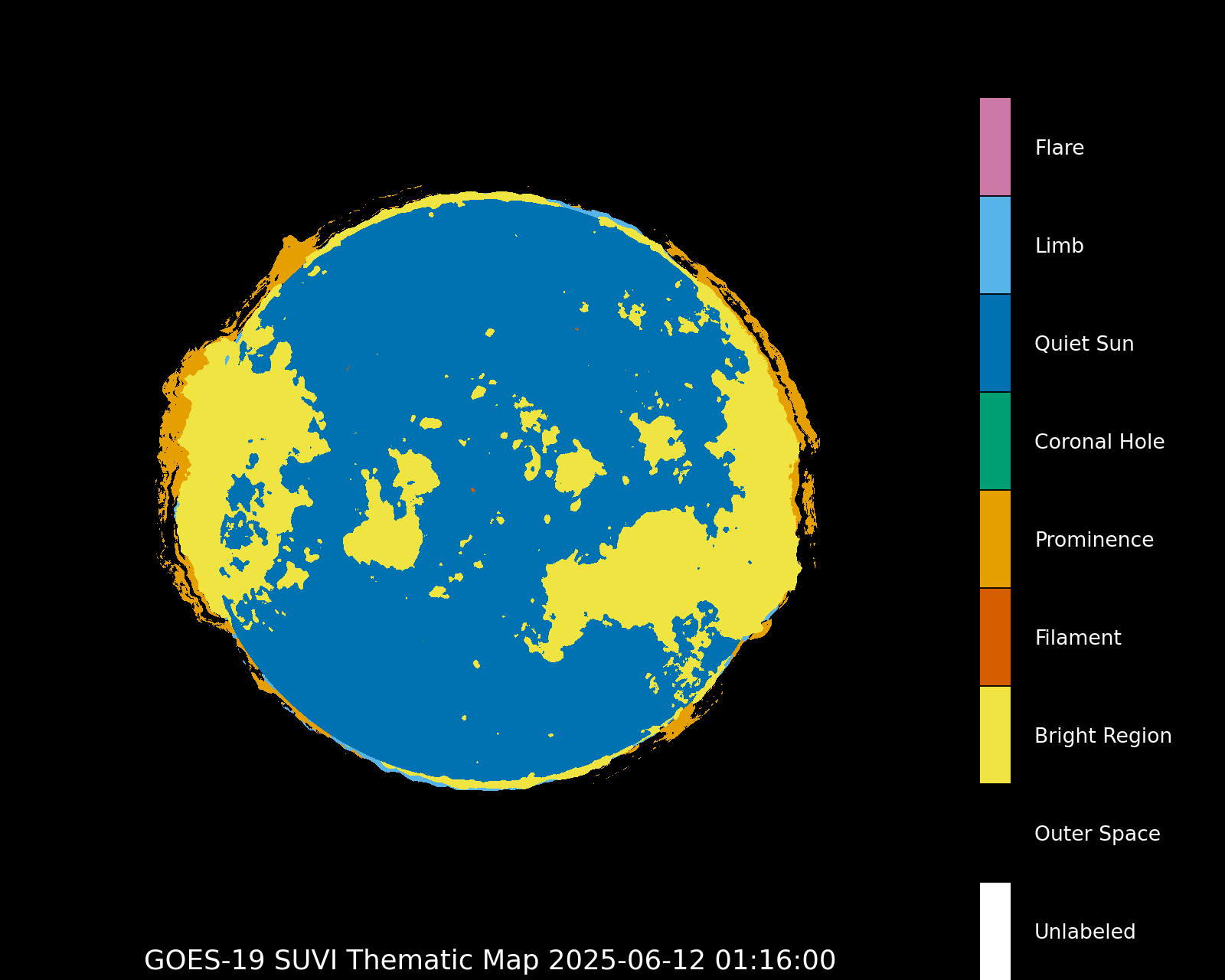
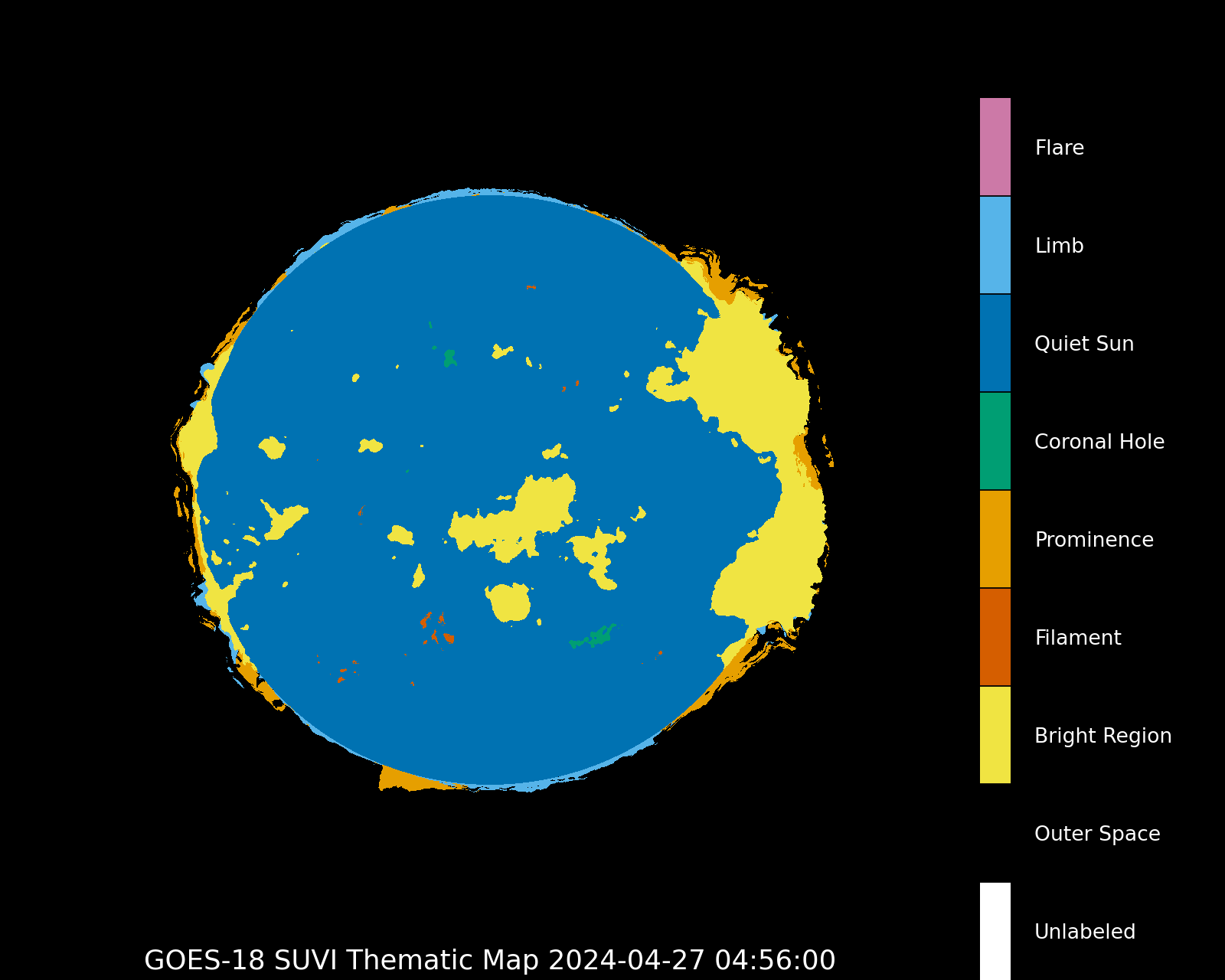
Thematic map
|
GOES-18
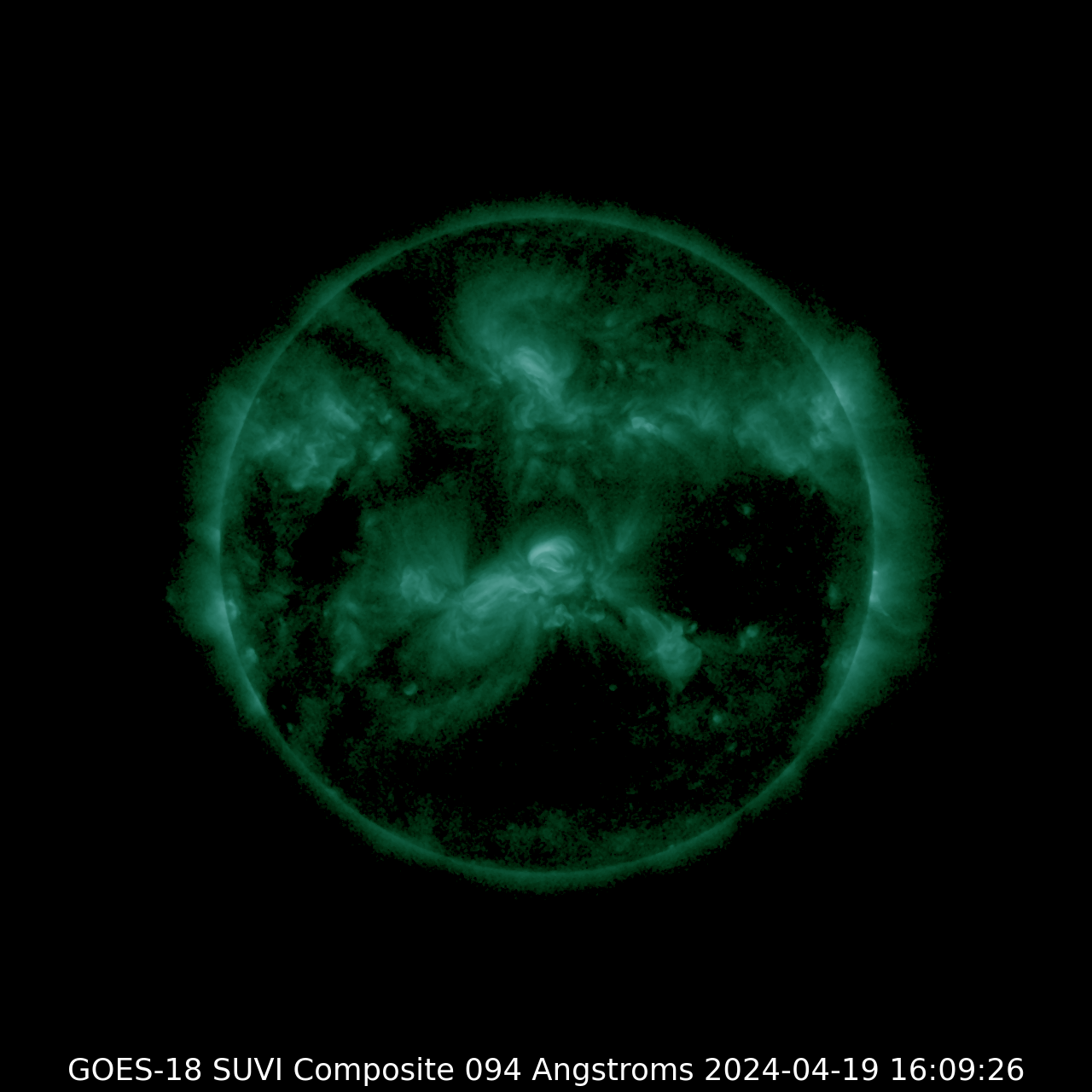
SUVI 094
| SUVI 131
|
SUVI 171
| SUVI 195
|
SUVI 284
| SUVI 304
|
Thematic map
|
Últimas noticias
G3 geomagnetic storm watch for 4 and 5 June
Coronal hole faces Earth
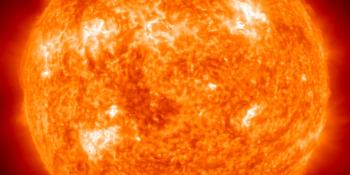
X1.5 solar flare
Últimos mensajes del foro
Apoye a SpaceWeatherLive.com!
A lot of people come to SpaceWeatherLive to follow the Solar activity or if there is a chance to see the aurora, but with more traffic comes higher costs to keep the servers online. If you like SpaceWeatherLive and want to support the project you can choose a subscription for an ad-free site or consider a donation. With your help we can keep SpaceWeatherLive online!


Hechos clima espacial
| Último evento clase X | 03/06/2026 | X1.0 |
| Último evento clase M | 21/06/2026 | M6.9 |
| Últimas tormentas geomagnéticas | 11/06/2026 | Kp5 (G1) |
| Días sin manchas | |
|---|---|
| Last 365 days | 3 días |
| 2026 | 3 días (2%) |
| Último día sin manchas | 24/02/2026 |
| Promedio de manchas solares mensuales | |
|---|---|
| mayo 2026 | 101.4 +22.1 |
| junio 2026 | 98.3 -3.1 |
| Last 30 days | 108.1 +9.3 |